
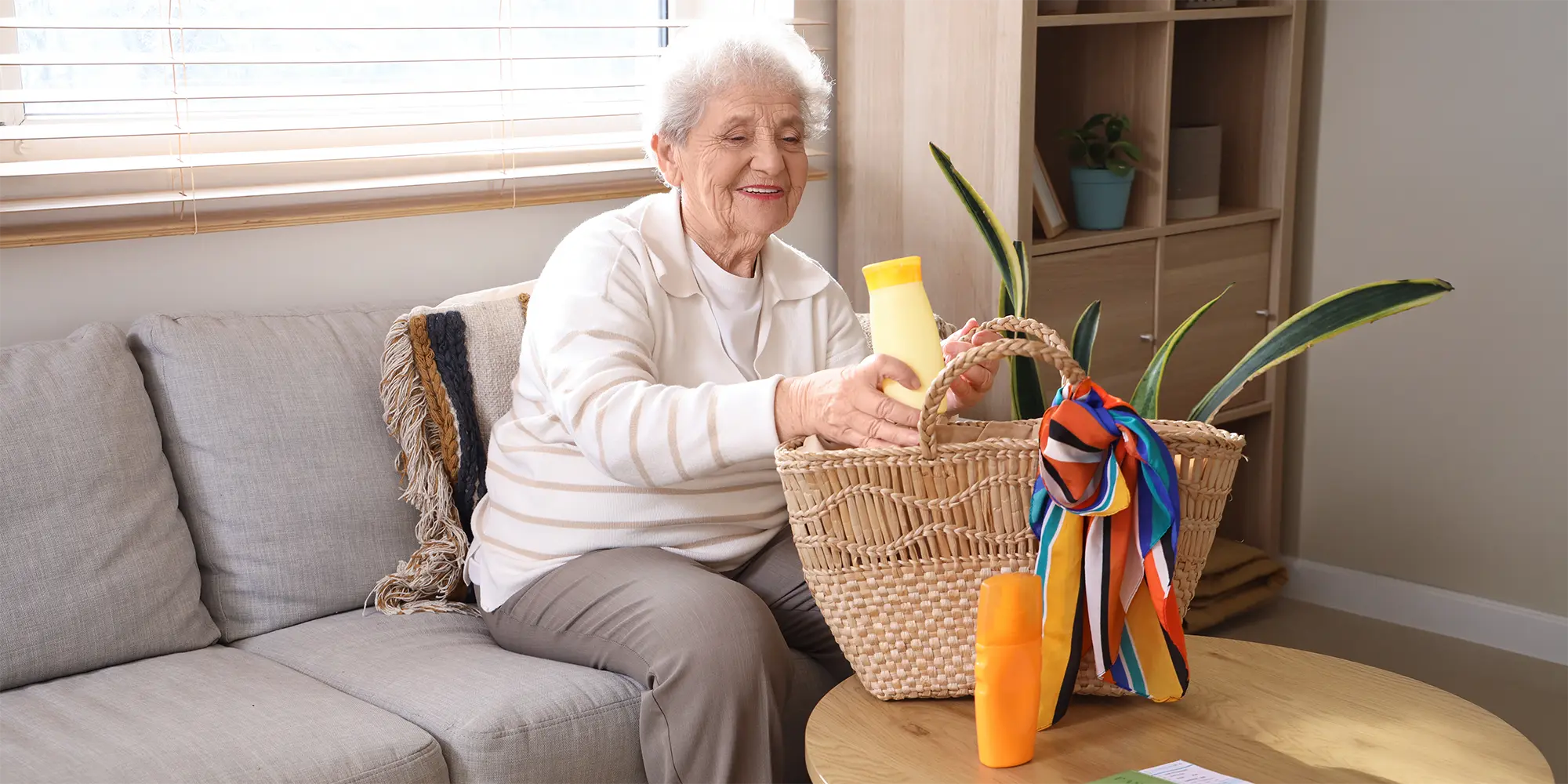
Sun safety might not be the first thing on your mind on a beautiful Southern California summer morning. The kind where the sun is already warm before 9 a.m. and the idea of a garden walk or a community outing sounds like exactly what the day calls for. For residents and families connected to Park Vista Health Center in Fullerton, California, that kind of day is part of the lifestyle here.
But here’s something worth knowing: the same sun that makes California living so appealing can quietly cause serious harm, especially for older adults. Sun safety is not about staying inside with the blinds drawn. It’s about stepping outside with the right knowledge and the right habits so that summer stays something to look forward to.
Why Sun Safety Looks Different for Older Adults
Sun safety is not a one-size-fits-all topic. The older we get, the more the rules change.
As Dr. Robert A. Norman of the Skin Cancer Foundation (2022) puts it, none of us know how long we will live, a reminder echoed by the late Mickey Mantle, who famously wished he had taken better care of himself. The point is not morbid. It is motivating. There is always more life to protect.
Here is what makes sun safety particularly important for older adults. Over time, skin becomes thinner and loses fat and water content, which allows UV light to penetrate more deeply. The body’s ability to repair damaged DNA also slows down. And the immune system, which helps fight off abnormal cell growth, naturally declines with age (Norman, 2022). In other words, the defenses that once helped protect against sun damage are not as strong as they once were, which is exactly why sun safety practices matter more now, not less.
The Real Risks of Sun Exposure for Seniors
Unprotected time in the sun does more than cause a sunburn. For older adults, the consequences can be more serious and faster to develop than most people expect.
The National Institute on Aging (2022) identifies several heat and sun-related conditions that older adults are especially vulnerable to, including heat exhaustion, heat stroke, and sun damage to the skin. Heat stroke, in particular, is a medical emergency where the body’s temperature rises dangerously high. Older adults are at greater risk because the body becomes less efficient at regulating temperature with age, and chronic conditions or medications can compound that challenge.
Sun exposure also increases lifetime risk of skin cancer. At least one in five Americans will develop skin cancer by age 70, and the majority of those cases occur in people over 65 (Norman, 2022). Knowing that is not meant to be scary. It is meant to be useful.
Medications and Sun Sensitivity
Here is something that often catches people off guard: many common medications increase sensitivity to the sun.
Diuretics, blood pressure medications, sedatives, tranquilizers, and certain heart medications can all make the body less able to cool itself or make skin more reactive to UV exposure (National Institute on Aging, 2022). For seniors who are managing multiple prescriptions, the combined effect can be significant.
The practical takeaway is simple. Sun safety for older adults is not just about sunscreen. It starts with knowing what medications you are taking and asking a doctor or pharmacist whether any of them increase sun or heat sensitivity. That one conversation can make a real difference in how safely you enjoy time outdoors.
Essential Sun Safety Tips for Staying Active Outside
Good news: sun safety does not have to complicate the activities you love. It just takes a little preparation. Here are the habits that make the biggest difference:
- Apply a broad-spectrum sunscreen with SPF 30 or higher every day, even when it is cloudy, and reapply at least every two hours or after sweating
- Wear lightweight, loose-fitting, light-colored clothing and a wide-brimmed hat
- Plan outdoor activities for early morning or late afternoon and seek shade between 10 a.m. and 4 p.m. when UV rays are strongest
- Stay hydrated before, during, and after time outdoors
- Wear UV-protective sunglasses to reduce eye exposure
- Ask your doctor whether any of your current medications increase sun or heat sensitivity
These are small habits with a big cumulative impact on long-term health.
Outdoor Living Done Safely at Park Vista
At Park Vista Health Center in Fullerton, outdoor life is part of everyday wellness. Community outings, garden time, and life enrichment activities give residents meaningful reasons to get outside and stay engaged with the world around them.
What makes that possible is the attentive clinical team behind the scenes. At Park Vista, staff are trained to monitor resident comfort and health, which means sun safety and heat awareness are part of how the community looks after its residents year-round. That combination of an active lifestyle and thoughtful clinical oversight is what allows older adults to enjoy summer in Fullerton the way it was meant to be enjoyed.
Enjoy Every Sunny Day with Confidence
Sun safety is not about fearing the outdoors. It is about knowing your body, respecting the sun, and taking the simple steps that let you keep doing the things you love. For older adults especially, those steps are worth building into every warm-weather routine.
If you are exploring senior care options for yourself or someone you care about, we would love to show you what life looks like at Park Vista Health Center. Contact us today to schedule a tour of our Fullerton community.
References
National Institute on Aging. (2022, September 2). Hot weather safety for older adults. https://www.nia.nih.gov/health/safety/hot-weather-safety-older-adults
Norman, R. A. (2022, March 1). The sun keeps rising: Why seniors can’t skip UV protection. The Skin Cancer Foundation. https://www.skincancer.org/blog/the-sun-keeps-rising-why-seniors-cant-skip-uv-protection/
Frequently Asked Questions:
Why are older adults more vulnerable to sun damage?
As we age, skin becomes thinner, the immune system weakens, and the body becomes less efficient at regulating temperature and repairing UV damage, all of which increase sun-related risks.
What medications increase sun sensitivity in seniors?
Diuretics, blood pressure medications, sedatives, tranquilizers, and some heart medications can all affect the body's ability to cool itself or increase skin reactivity to UV. Always ask your doctor or pharmacist.
What SPF should seniors use?
The Skin Cancer Foundation recommends a broad-spectrum sunscreen with SPF 30 or higher for daily use, and SPF 50 or higher for extended outdoor activities.
How does Park Vista support safe outdoor activities for residents?
Park Vista's clinical team actively monitors resident health and comfort while providing life enrichment programs that include supervised community outings and outdoor activities throughout the year.