
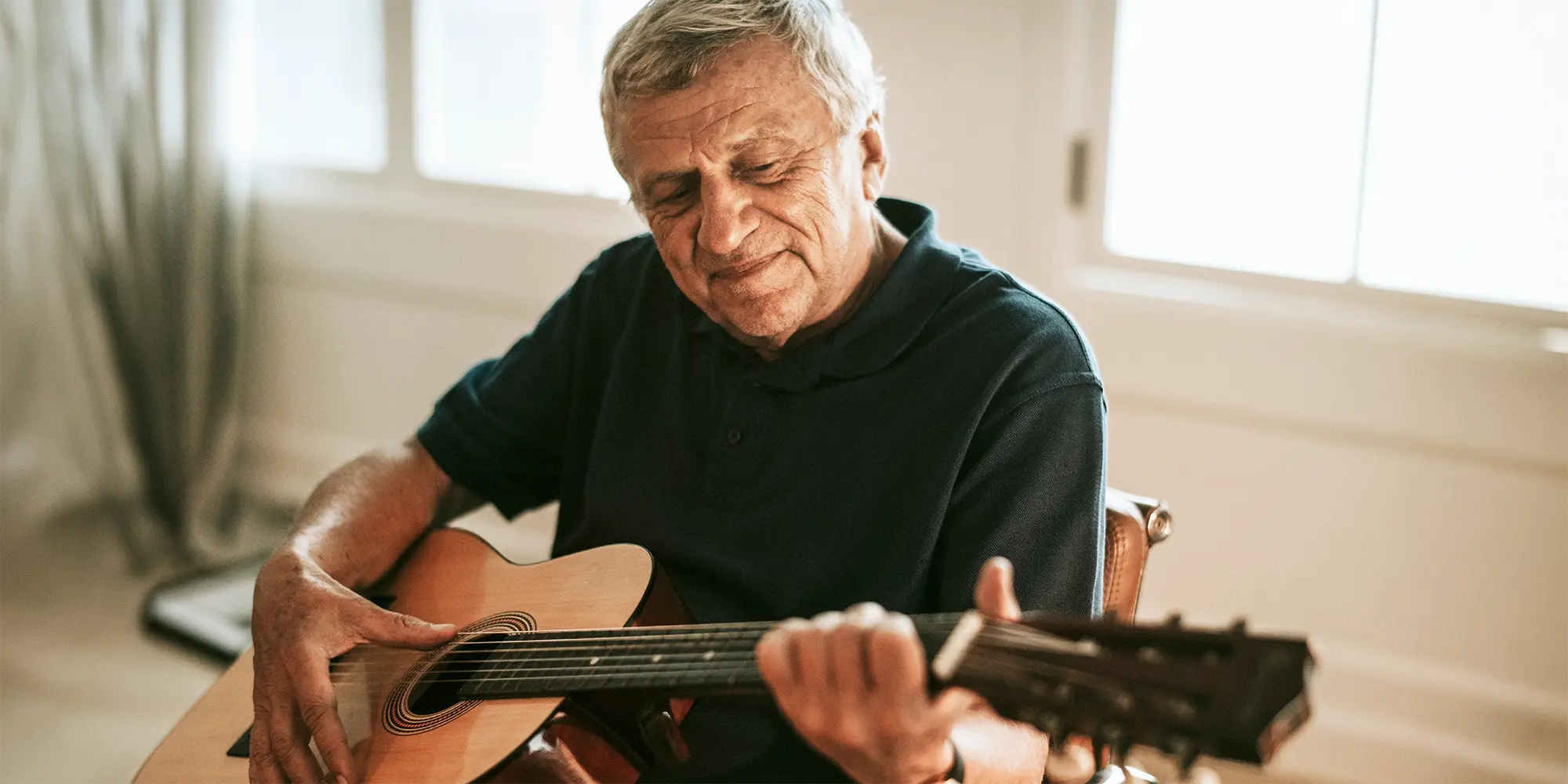
Think about the last time a song stopped you in your tracks. Maybe it was something from decades ago that brought a memory flooding back. A face. A feeling. A moment you thought was long gone. That’s not just nostalgia. That’s your brain doing something remarkable, and it turns out, that power can be harnessed in meaningful ways for older adults.
At Park Vista Health Center in Fullerton, California, music therapy and the creative arts are woven into daily life. And there’s a growing body of research that explains why that matters.
What Is Music Therapy?
Music therapy is more than playing songs in a common room. According to the American Music Therapy Association (n.d.), it is the clinical and evidence-based use of music interventions to accomplish individualized goals within a therapeutic relationship, delivered by a credentialed professional. It can address a wide range of needs, from memory and communication to physical rehabilitation and emotional well-being.
In other words, music therapy is a structured, intentional practice. And for older adults, its benefits can be profound.
What the Research Says
Research from UCLA Health (2025) highlights several ways music therapy may support health in older adults:
- Memory. Listening to familiar music can help older adults with dementia recall life events and reconnect with others. Studies have also found that musical instrument training may improve verbal memory and thinking speed in people ages 60 to 80.
- Mood and mental health. Music therapy may help reduce symptoms of depression in older adults, and group singing programs have been linked to decreased feelings of loneliness.
- Motor skills and balance. Dancing to music has been associated with improved balance and a reduced risk of falling. Playing an instrument may also help maintain fine motor skills.
- Cognitive function. When people listen to or create music, multiple regions of the brain activate simultaneously, forming connections that can support overall brain health.
These findings reinforce what caregivers have long observed: music therapy reaches people in ways that other interventions sometimes cannot.
Music Therapy and the Creative Arts at Park Vista
At Park Vista Health Center, creative engagement is built into the fabric of life here. Residents have access to music therapy, Music and Memory Time, Painting Workshops, Craft and Ceramics classes, a community Choir, live performers, and museum outings. These aren’t extras. They’re considered a core part of whole-person care.
Music therapy, in particular, can be especially meaningful for residents living with memory loss. Familiar songs can serve as anchors, sparking recognition and connection even when other forms of communication feel out of reach.
Creativity, in all its forms, gives residents a way to express themselves, engage their minds, and stay connected to who they are.
Why It All Matters
It would be easy to think of music or painting as nice additions to a care schedule. But the evidence tells a different story. Music therapy is a legitimate clinical tool. The arts are not a luxury. And for older adults navigating health challenges, these experiences can contribute to a real sense of purpose, dignity, and joy.
The team at Park Vista Health Center in Fullerton understands that caring for residents means caring for the whole person, mind, body, and spirit.
Experience the Difference at Park Vista
If you’re exploring care options for yourself or someone you love, we’d welcome the chance to show you what life looks like at Park Vista.
Contact us today to schedule a tour and learn more about our Life Enrichment programs.
References
American Music Therapy Association. (n.d.). What is music therapy? https://www.musictherapy.org/about/musictherapy/
UCLA Health. (2025, April 1). How music therapy helps older adults. https://www.uclahealth.org/news/article/how-music-therapy-helps-older-adults
Frequently Asked Questions:
What is music therapy?
It is a clinical practice that uses music to support health goals. It is delivered by a credentialed professional.
Can music therapy help someone with dementia?
Research suggests it may support memory recall and emotional connection in people with dementia or Alzheimer's disease.
Does Park Vista offer music therapy?
Yes. Music therapy is part of Park Vista's Life Enrichment programming in Fullerton, California.
Do residents have to be musical to benefit?
Not at all. Research shows that simply listening to music can enhance brain health and mood.